Portable Cordless Valve Actuator Buyers Guide: Torque, Safety & Selection

Photo by Mike van Schoonderwalt on Pexels
What is a Cordless Portable Valve Actuator?
A cordless portable valve actuator is a battery‑operated hand-held tool designed for exercising industrial valves. Unlike permanent electric or pneumatic actuators that are mounted directly on the valve, a portable cordless valve actuator unit is brought to the valve site and attached temporarily. This allows operators to open, close, or maintain valves without the expense and installation work of a dedicated actuator. Models such as the 3S AIG Handheld Valve Actuator and the Torcbrain Portable Cordless Valve Actuator are commonly used across Australian water utilities, mine sites, and offshore rigs.
Key Benefits for Industrial and Utility Operations
Improved Operator Safety
Manually operating large or seized valves can put workers at risk of musculoskeletal injury. A cordless actuator applies controlled torque remotely, allowing the operator to stand clear of the valve spindle. Variable torque settings mean the tool can be set to apply only the force needed, reducing the chance of over‑torquing and valve damage.
Speed and Efficiency
A single operator can exercise a valve in a fraction of the time required for manual operation. For utilities with many valves to maintain, this translates to faster shut‑downs, shorter service windows, and lower labour costs. Cordless operation also eliminates the need for trailing hoses or nearby power outlets, making the tool effective in remote or confined spaces.
Portability and Flexibility
Portable actuators can be used across different valve types and sizes by swapping adaptors. The Torcbrain system, for example, offers adaptors for handwheels, valve stems, universal joints, reaction arms, telescopic extensions, and revolution counters. This flexibility means one tool can serve an entire facility rather than requiring a separate actuator for each valve.
Cost Savings Through Valve Rehabilitation
Regular exercising of valves using a cordless actuator can extend the life of existing valves. The 3S AIG Handheld Valve Actuator, for instance, is reported to save costs by enabling rehabilitation of valves instead of full replacement. A modest investment in a portable actuator can postpone or avoid the capital outlay of new valve installations.
Battery‑Powered Convenience
Lithium‑ion battery packs allow the actuator to be used where no air supply or mains electricity is available. Although runtime depends on load and valve condition, modern cordless systems provide enough energy for routine exercising across a typical shift. Operators carry a spare battery pack to keep work flowing without delay.
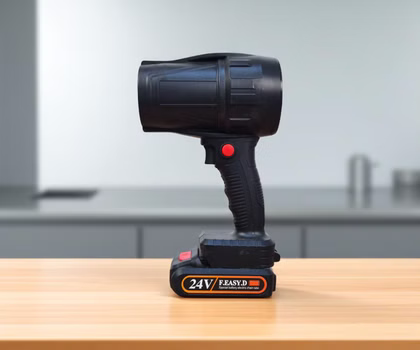
Photo by Abdulla Mohammed on Pexels
What to Look for When Buying
Torque Range and Settings
The most important specification is the torque capability of the actuator. The force required to move a valve varies with valve size, design, and differential pressure. Look for a tool that covers your common valve torque requirements. The Torcbrain Portable Cordless Valve Actuator offers a torque range of 20 to 950 Nm with 44 adjustable settings. Many portable actuators provide variable torque selections so you can match the tool output to the valve’s demands without over‑torquing.
Valve Compatibility and Adaptors
Not every actuator fits every valve. You need a system that can accept adaptors for the valve types on your site. Common adaptors include handwheel keys, stem sockets, universal joints, and reaction arms. Check whether the actuator supports both multi‑turn gate valves and quarter‑turn ball or butterfly valves. Some portable models are designed primarily for multi‑turn operation but can be adapted for part‑turn service with the correct accessories.
Battery System Specifications
Consider the voltage, capacity (in ampere‑hours), and charging time of the battery packs. Cordless tools in the industrial class often use 36V platforms. Ensure the battery charger matches your workshop voltage (e.g., 240V in Australia). If your work involves extended periods away from charging, a tool that uses a common battery platform may be preferable, but proprietary systems can offer higher performance and durability.
Build Quality and Durability
Industrial valve exercising happens in harsh environments, wet trenches, dusty mines, and corrosive coastal installations. Look for an actuator with an ingress‑protection rating suitable for the conditions. German‑engineered units such as Torcbrain are manufactured to high standards and are distributed in Oceania and North America by Emazing International Pty Ltd. A robust housing and sealed electronics reduce downtime and maintenance costs.
Common Use Cases Across Industries
Portable cordless valve actuators are found in a wide range of industrial and utility settings. According to the distributor of Torcbrain, these tools are used by councils, water boards, utilities, mine sites, power stations, offshore drill rigs, refineries, and engineering companies across Australia, New Zealand, Canada, and the United States.
- Water and wastewater: Exercising isolation and control valves in treatment plants, reservoirs, and distribution networks to ensure they operate when needed.
- Mining: Operating slurry valves, pipeline valves, and process valves in remote locations where permanent actuation is not cost‑effective.
- Energy and power generation: Maintaining steam, cooling water, and fuel valves at thermal and hydroelectric stations.
- Offshore and marine: Exercising valves on drill rigs, floating production vessels, and refineries where space is tight and power sources may be limited.

Photo by Mumtaz Niazi on Pexels
Cordless vs. Permanent Actuators: A Practical Comparison
| Factor | Portable Cordless Actuator | Permanent Dedicated Actuator | |
| Installation cost | Low – no mounting or wiring required | High – structural brackets, cabling, control system | |
| Flexibility | One tool used on many valves; adaptors for different stem types | Fixed to one valve; limited to that valve’s operation | |
| Operation | Carried to the valve by one person; set torque and operate | Operated remotely from a control room or local panel | |
| Capital outlay | Moderate single purchase; covers many valves | High per‑valve cost; multiples needed for large sites | |
| Maintenance | Battery charging and occasional servicing of gear unit | Motor, gearbox, limit switches, and controller require specialist attention | |
| Best suited for | Valves exercised infrequently, remote locations, budget‑sensitive projects | Critical valves that must be operated many times per hour (modulating duty) |
Photo by David Brown on Pexels
Buying Considerations and Selection Steps
Determine Valve Type and Duty
Valves fall into two broad categories for actuation: linear (gate, globe, pinch) and part‑turn (ball, butterfly, plug). Linear valves require multi‑turn output with a stem nut or handwheel attachment. Part‑turn valves typically need a quarter‑turn (90°) rotation. The torque demand for quarter‑turn valves cannot be calculated accurately on paper; physical measurement under operating differential pressure is recommended. Speed of operation also matters – faster cycling requires more power from the actuator. Frequency of operation (e.g., isolating duty versus modulating duty) influences the durability of the actuator’s mechanical drive. Industry benchmarks include 60 and 1,200 starts per hour for isolating and modulating service, respectively.
Match Torque to Valve Requirements
Obtain the torque rating of each valve you intend to exercise. Values are usually given by the valve manufacturer in Newton‑metres (Nm) for a new condition. Allow a safety margin for older valves that may have become stiff through corrosion or debris. The portable actuator should have a maximum torque rating at least 20–30% higher than the highest valve torque you expect to encounter. Select a model with enough torque settings to avoid applying excessive force to small or delicate valves.
Check Physical Constraints
Measure the clearance around the valve. A portable actuator has a certain length, diameter, and weight – it must fit into valve pits, manholes, or between pipes. Some models offer telescopic extensions or universal joints to reach awkwardly positioned handwheels. If the valve is mounted in a confined space, confirm that the actuator can be attached and that the operator can hold it securely.
Consider Battery Life and Recharging Logistics
While exact runtime per charge varies with load, you should plan for at least a full shift or a set of the most demanding valves. Spare battery packs allow continuous operation. Choose a charger that can recharge a pack within a reasonable time (one to two hours is typical for modern lithium‑ion systems). If your site operates around the clock, a fast charger can keep a second pack ready while the first is in use.
Frequently Asked Questions
What torque range should I look for in a cordless valve actuator?
Choose an actuator whose torque range covers the highest valve torque on your site with a 20–30% safety margin. Many industrial models offer ranges from 20 Nm up to 950 Nm with multiple settings, such as the Torcbrain actuator’s 44 torque steps. The exact requirement depends on the valve size, type, and differential pressure.
Can one person operate a cordless valve actuator?
Yes, portable cordless actuators are designed for single‑person operation. The tool is lightweight enough to carry to the valve, and the battery power eliminates the need for other power sources. An operator can attach adaptors, set the torque, and exercise the valve without assistance.
Which valve types are compatible with portable actuators?
Most portable actuators can operate multi‑turn valves (gate, globe) using handwheel adaptors or stem keys. Many also support quarter‑turn valves (ball, butterfly) with the correct adaptors. Check that the actuator offers the specific stem or handwheel adaptors for your valve fleet before purchasing.
How does a cordless actuator compare to manual valve operation?
A cordless actuator applies controlled torque much faster and more safely than a manual wrench. It reduces physical strain on workers, minimises the risk of over‑torquing, and allows a single operator to exercise many valves in a short period. Manual operation remains viable for very small valves or where budget is extremely tight, but cordless actuation improves consistency and safety.
What industries benefit most from cordless valve actuators?
Water utilities, councils, mine sites, power stations, refineries, and offshore drill rigs all benefit. Any facility with numerous valves that need periodic exercising, remote locations without permanent power, or budget constraints that prevent installing a dedicated actuator on every valve will find cordless portability valuable.